Thermo-physical property evaluation of diathermic oil based hybrid nanofluids for heat transfer applications

Diathermic oil has high boiling point, low vapor pressure and low pour point, so it has been widely used as a heat carrier in heat transfer systems. Due to the excellent thermo-physical property of nanofluids, a kind of hybrid nanoparticles (SiC/TiO2) was dispersed in diathermic oil to fabricate nanofluids with concentration up to 1 vol% in this paper. And there was no visually observable sedimentation or stratification even after ten days. As two characteristics of thermo-physical property, the thermal conductivity and viscosity were measured under the same conditions respectively, and the experimental results showed that the thermal conductivity of nanofluids increased with increasing volume fractions of nanoparticles and increasing of temperature. With the loading further increasing, the thermal conductivity of SiC/TiO2nanofluids is higher than SiC or TiO2nanofluids', and the maximum of thermal conductivity enhancement ratio is 8.39% at 1 vol.%. Thermal conductivity enhancement ratio was a linear relationship with the volume fraction. Suspending SiC/TiO2nanoparticles can enhance thermal capacity of the system. In rheological experiment, the shear viscosity almost maintained constant with shear rate increasing at the given temperature, which means that the samples are Newtonian fluid. And the higher the nanofluids concentration was, the larger value of their shear viscosity. There were some anomalous phenomena occurred in rheological behavior, which may be caused by the breaking up of hybrid of two types of nanoparticles.
In this project, both calculating the solar-weighted absorption coefficient(Am) and analysing its trend with different extinction coefficient K(λ) are necessary. To quantitatively evaluate the absorbed incident radiation by nanofluids, the solar-weighted absorption coefficient(Am), which describes the percentage of solar energy that is absorbed across a fluid layer of selected thickness in the wavelength range (λmin, λmax) was calculated by the following equation:
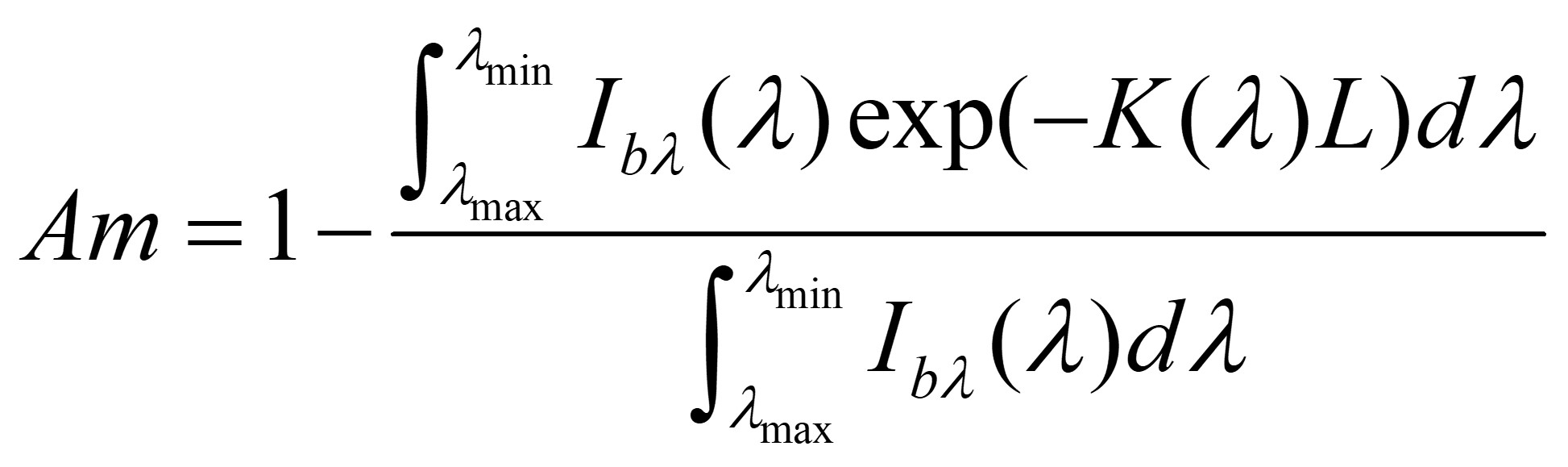
The solar-weighted absorption coefficient(Am)

where the incident solar intensity [I(λ)] can be obtained from the blackbody relation as follows:
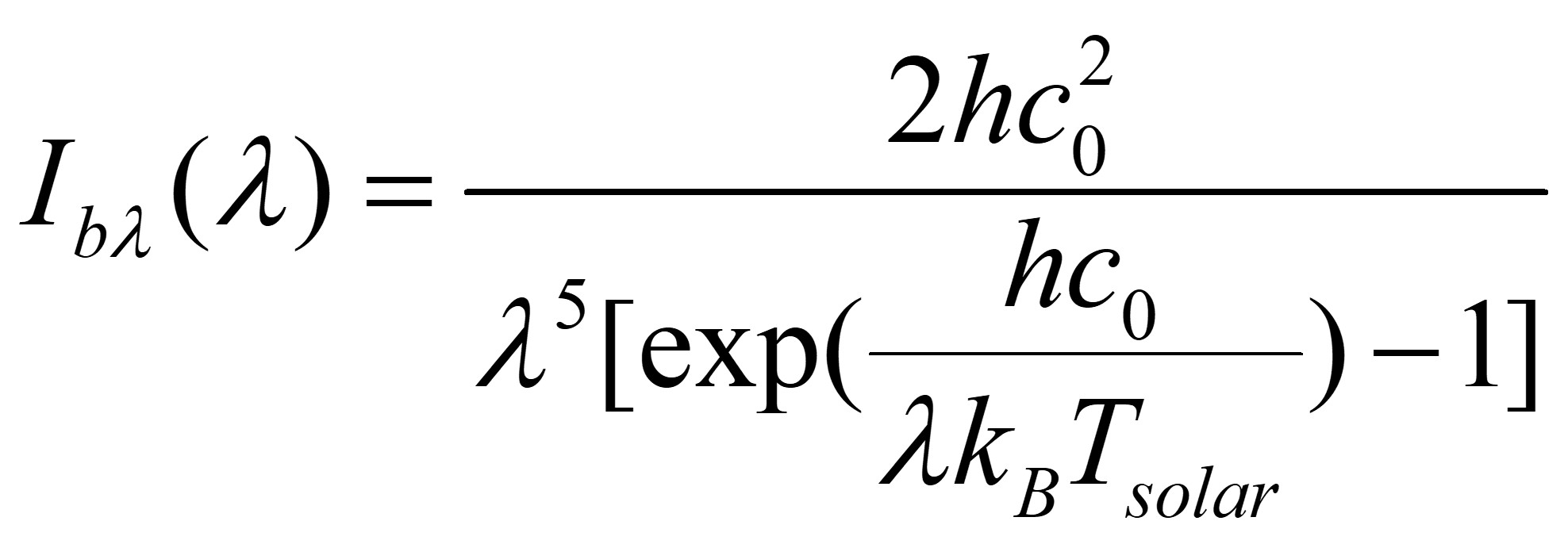
The incident solar intensity

When the optical path (L) was determined, the solarweighted absorption coefficient(Am) increased with volume fraction up to 100%. It can be seen from following figure that the Am of TiO2 nanofluids increased from 87.5% at 0.025 vol% to 99% at 0.2 vol% at the optical path of 1 cm.
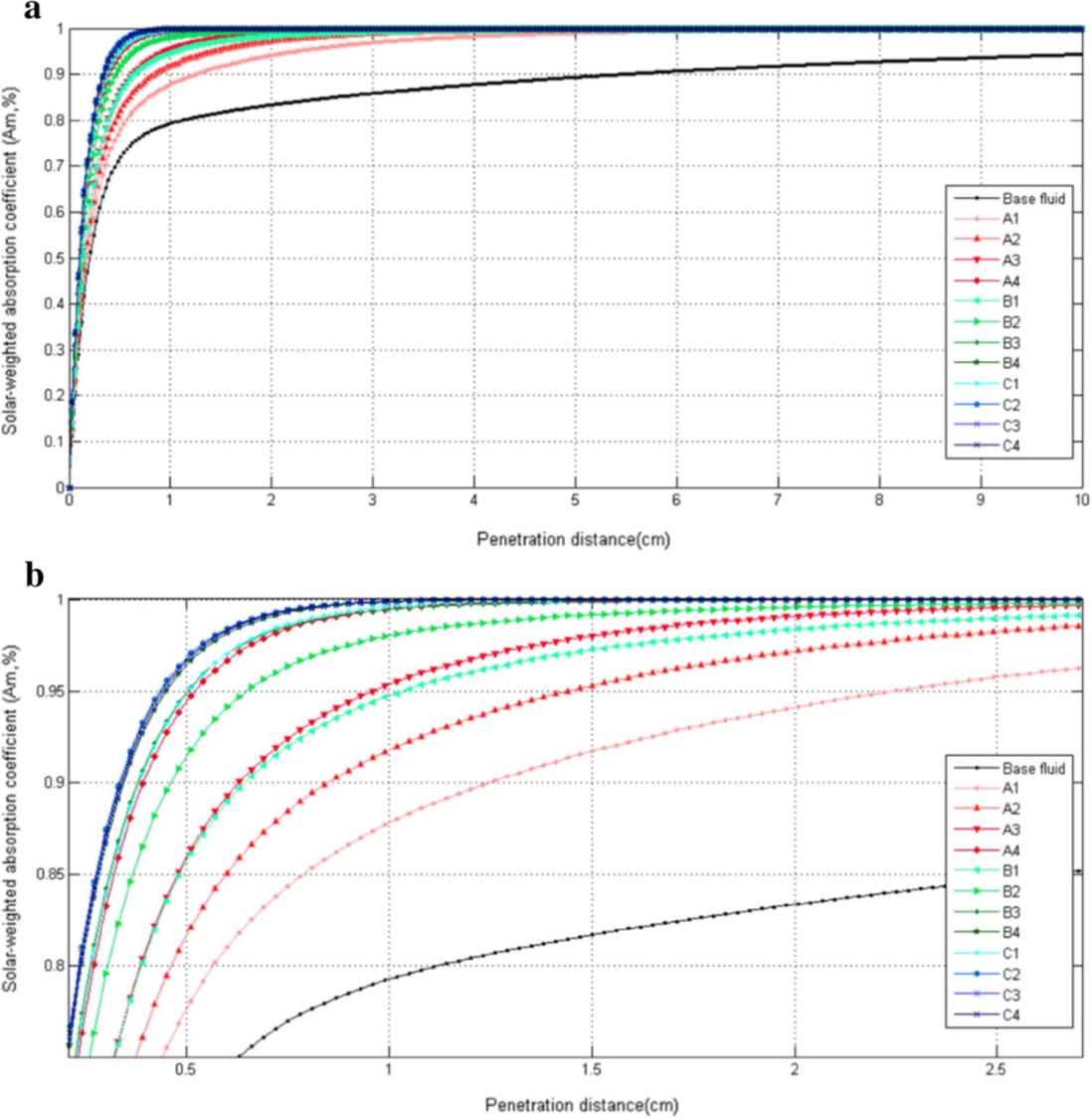
Solar-weighted absorptioncoefficient (Am) versus the penetration distance (L) for the nanofluids at different vol% (a), and the local enlarged drawing(b)
These calculation and figures illustrate in the paper: Experimental investigation on optical and thermal properties of propylene glycol–water based nanofluids for direct absorption solar collectors.
This paper is supported by The National Natural Science Foundation of China (21576225).